Most stamping parts are never noticed by the end user. They sit behind covers, inside housings, or integrated into larger mechanical and electrical systems where their function is expected rather than seen. Yet in many technical assemblies, the performance of the final product depends directly on the consistency and reliability of these individual metal components.
A stamped part may guide movement, secure a connection, transfer force, maintain positioning, or support assembly between multiple components. In many cases, it performs several of these functions simultaneously.
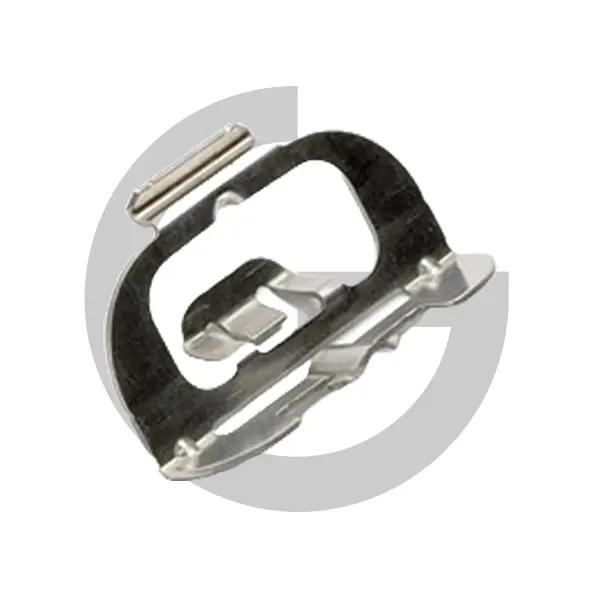
At HAGENS, stamping parts are produced for a range of technical applications including brake wear indicators, screw terminals, construction components, and custom mounting parts. These components are used across industries such as automotive, industrial equipment, construction, and technical manufacturing.
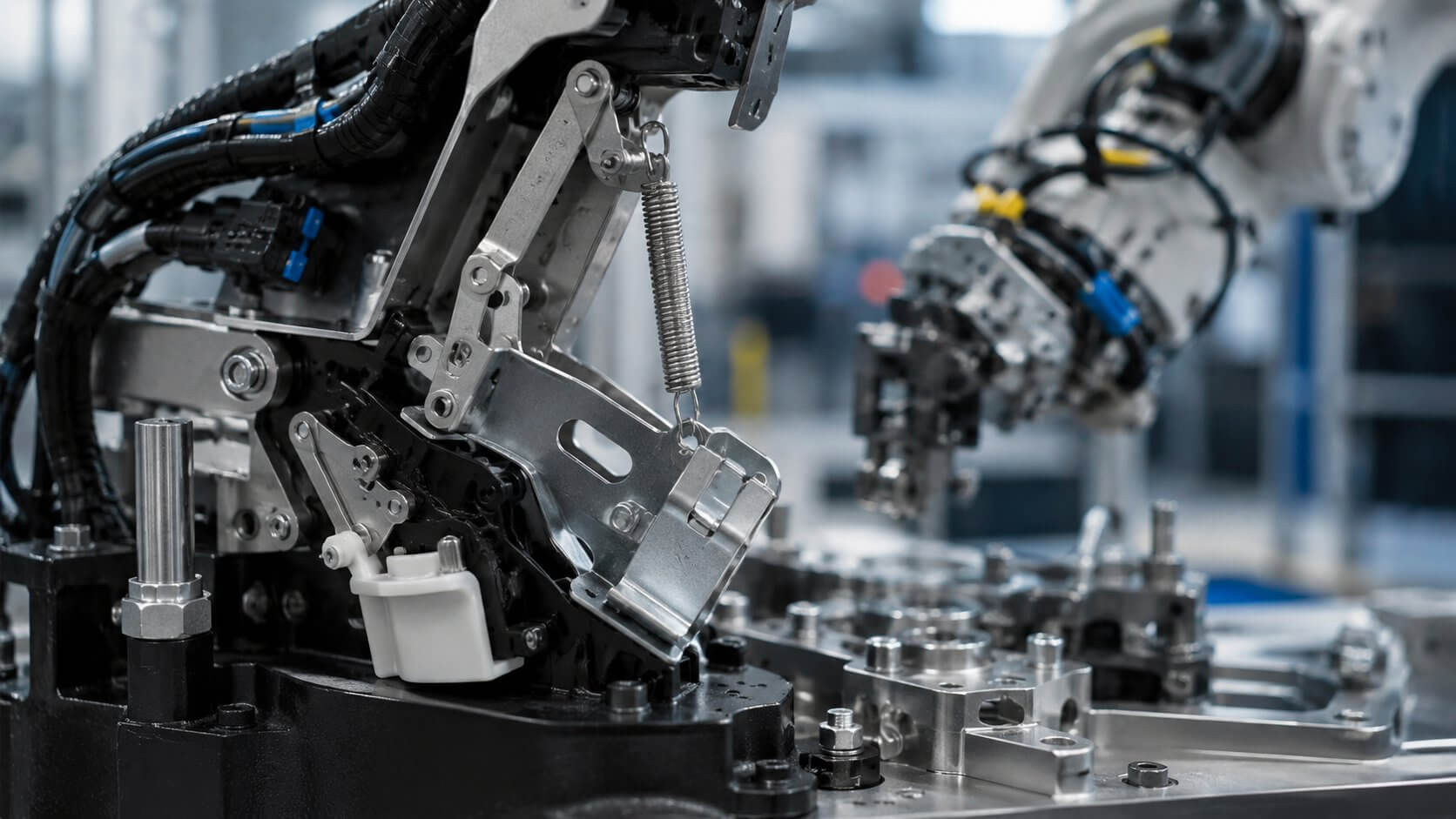
Stamping parts as functional components
In technical assemblies, stamping parts are rarely decorative. Their role is typically mechanical, electrical, or structural.
A screw terminal, for example, must maintain a secure electrical connection while withstanding repeated tightening and long-term vibration. A brake wear indicator must respond consistently under continuous mechanical stress and environmental exposure. Mounting components must fit precisely within the surrounding assembly to ensure correct alignment during installation.
Because these parts are often integrated into larger systems, even small deviations can affect the performance of the entire assembly. The stamped component therefore becomes part of a chain where reliability depends on repeatability.
This is one reason stamping remains widely used in technical manufacturing. The process allows complex metal shapes to be produced consistently and efficiently while maintaining the dimensional stability required for assembly applications.
The role of stamped parts in electrical assemblies
Electrical assemblies often rely on small stamped metal components to create stable and durable connections.
In these applications, the stamped part may function as:
- a conductor
- a contact point
- a clamping component
- a mounting feature
- a support element inside the housing
The geometry of the component becomes critical because the assembly typically contains limited space and multiple interacting parts. If the stamped component does not align correctly, it may affect installation, contact pressure, or long-term operational stability.
HAGENS manufactures screw terminals where secondary operations such as thread cutting and screw insertion are integrated directly into the stamping process. This reduces handling between production stages and helps maintain alignment throughout manufacturing.
Also read – Precision Stamping Parts – Why Tolerances Matter in Technical Applications
Automotive applications require long-term consistency
Technical assemblies in the automotive sector operate under continuous vibration, temperature variation, and mechanical load. In these environments, stamped parts must maintain both dimensional consistency and predictable performance over long operational periods.
HAGENS supplies stamping parts for applications including:
- brake wear indicators
- seat belt systems
- sunroofs
- engine-related assemblies
- hood mechanisms
These applications place different demands on the component depending on its position and function within the vehicle. Some parts are exposed to repeated movement, while others must maintain stable positioning throughout the vehicle lifetime.
In assemblies where safety or operational reliability is involved, consistency across production batches becomes particularly important. HAGENS operates according to IATF 16949, the automotive quality management standard used within the automotive supply chain.
Construction and industrial assemblies
Stamping parts are also widely used in construction-related and industrial assemblies where components must support installation, fastening, or structural positioning.
In these applications, stamped parts are often integrated into:
- brackets
- mounting systems
- fastening assemblies
- enclosure systems
- mechanical support structures
Unlike larger fabricated components, stamped parts can often combine several functions into a single compact geometry. This may reduce assembly complexity while ensuring consistent positioning during installation.
For industrial equipment, stamped components are frequently required to operate in environments exposed to dust, moisture, abrasion, or repeated mechanical stress. Material selection and production consistency therefore become important factors in long-term durability.
Integration with other metal components
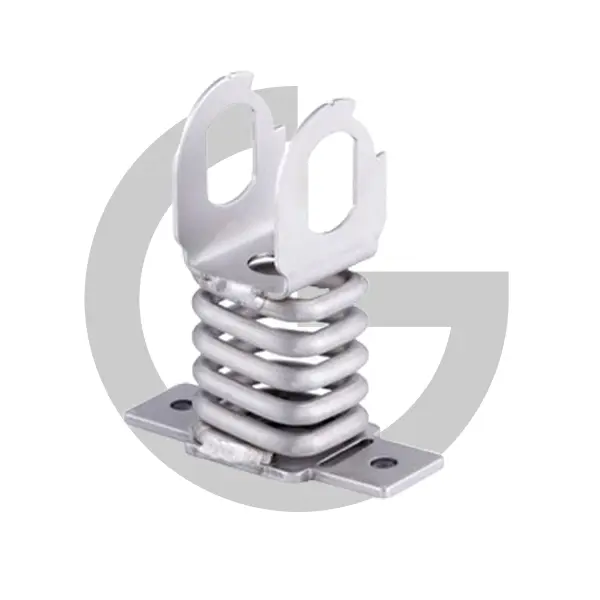
Technical assemblies rarely consist of a single component type. Stamping parts are often used together with springs, wire forms, clips, and machined components within the same system.
This integration is especially relevant in assemblies where controlled movement or mechanical retention is required. A stamped component may act as the fixed interface while another component manages force, flexibility, or motion.
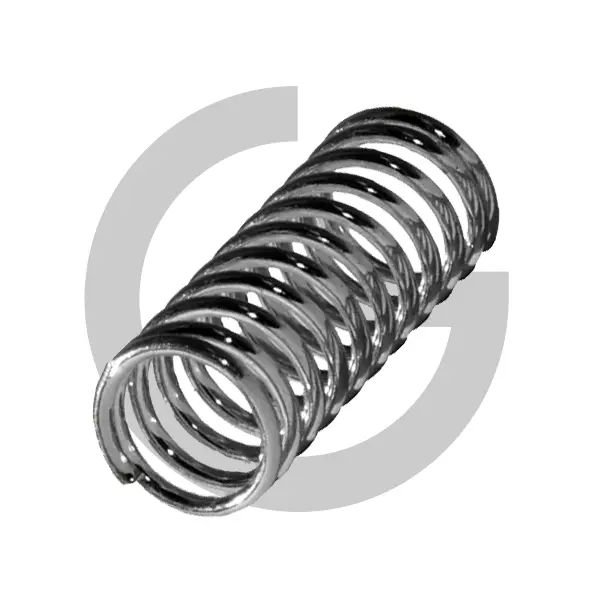
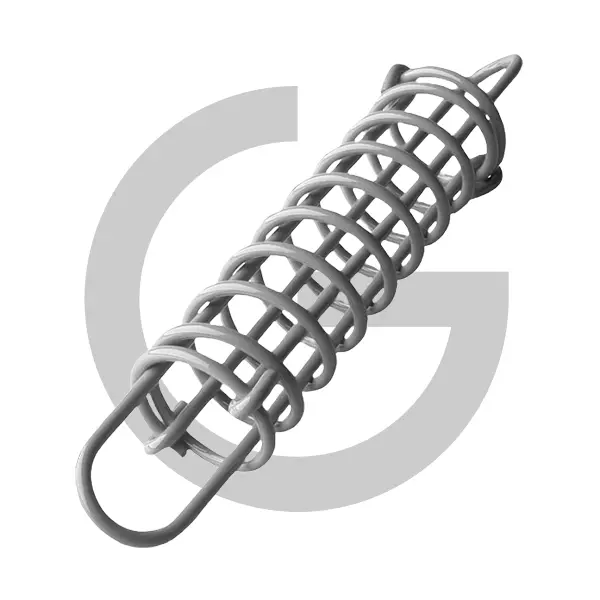
HAGENS manufactures both stamping parts and multiple categories of technical springs and wire components, including compression springs, tension springs, torsion springs, locking rings, and wire forms.
This combination allows stamped parts to be developed in relation to the surrounding mechanical system rather than as isolated components.
Also read – When a Clock Spring Is the Right Choice Over a Torsion Spring
Consistency matters throughout the assembly
A technical assembly depends on interaction between components. Even when a stamping part appears relatively simple on its own, its dimensions and repeatability influence the surrounding system.
If a mounting feature is slightly offset, assembly alignment may change. If a contact geometry varies, electrical performance may become inconsistent. If a fastening component loses dimensional stability, wear and movement can increase elsewhere in the product.
For this reason, the value of a stamping part is often measured less by the complexity of the individual component and more by how reliably it performs inside the complete assembly.
The objective is not visibility. The objective is stable function over time.
In many industries, that consistency is what allows technical assemblies to operate reliably across thousands or millions of repeated cycles.